





WHAT IS BLOCKCHAIN?
Don’t be spooked by the technobabble that people use to describe “blockchain.” A blockchain is just a database. It isn’t a particularly sophisticated one, either – you could create it in a spreadsheet with minimal effort.
There are some peculiarities with these databases. The first is that blockchains are append-only. That means that you can only add information – you can’t just click on a cell and delete stuff that you’ve already added, or change it in any way.
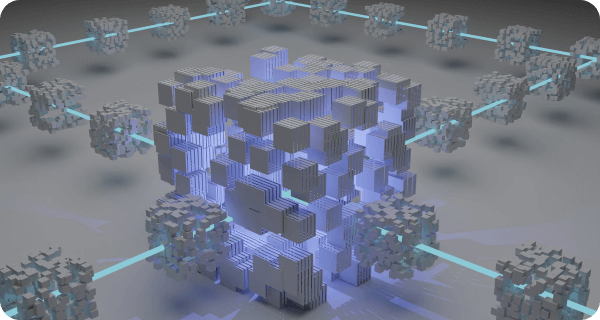
The second is that each entry (called a block) in the database is cryptographically linked to the last entry. In plain English, each new entry must contain a sort of digital fingerprint (hash) of the last one.
And that’s it! Since each fingerprint points back to the last one, you end up with a chain of blocks. Or – as the cool kids like to call it – a blockchain.
A blockchain is immutable: if you change a block, it changes the fingerprint. And since that fingerprint is included in the next block, the next block is changed too. And since that block’s fingerprint… well, you get the idea. You end up with a domino effect where any change becomes evident. You can’t alter any information without everyone noticing.
IS THAT IT?
Underwhelmed? That’s fair. The innovation here isn’t some cumbersome alternative to Google Sheets. It’s that everyone can download blocks from other people on the network to build identical copies of the blockchain on their computers. That’s what the software we mentioned earlier does.
Suppose that you and your friends Alice, Bob, Carol, and Dan are running the software. You might say “I want to send five coins to Bob.” So you send that instruction to everyone else, but the coins aren’t sent to Bob immediately.
Carol might decide at the same time to send Alice five coins. She also sends her instruction out to the network. At any time, a participant can gather up the pending instructions to create a block.
If anyone can make a block, what stops them from cheating?
It probably seems very attractive to you to create a block that says “Bob pays me a million coins.” Or to start buying Lamborghinis and fur coats from Carol by making transactions with funds you don’t own.
Well, that’s not how it works. Because of some cryptography, game theory, and something called a consensus algorithm, the system prevents you from spending funds you shouldn’t be able to spend.